U.S. Secretary of State Marco Rubio said at the G20 meeting that interest is growing in a limited Black Sea ceasefire to guarantee grain and energy shipments, and that Washington is evaluating proposals from Turkey and India.
U.S. Secretary of State Marco Rubio said on Saturday that interest is growing within the international community in facilitating a limited ceasefire in the Black Sea that would guarantee the unrestricted flow of grain and energy from Russia and Ukraine. At a news conference at the end of the G20 foreign ministers' meeting, Rubio said Washington is evaluating proposals from Turkey and India to restart grain shipments, although a broader negotiated agreement is not close.
Russia's full-scale invasion of Ukraine, now in its fifth year, dominated the two-day meeting of G20 foreign ministers, partly because of the participation of Russian Foreign Minister Sergei Lavrov, despite objections from European and Canadian leaders who considered that his presence normalized Russian aggression. The meeting ended without a joint statement or agreements on the many challenges facing the world's largest economies, and laid bare deep divisions over the wars in Ukraine and the Middle East.
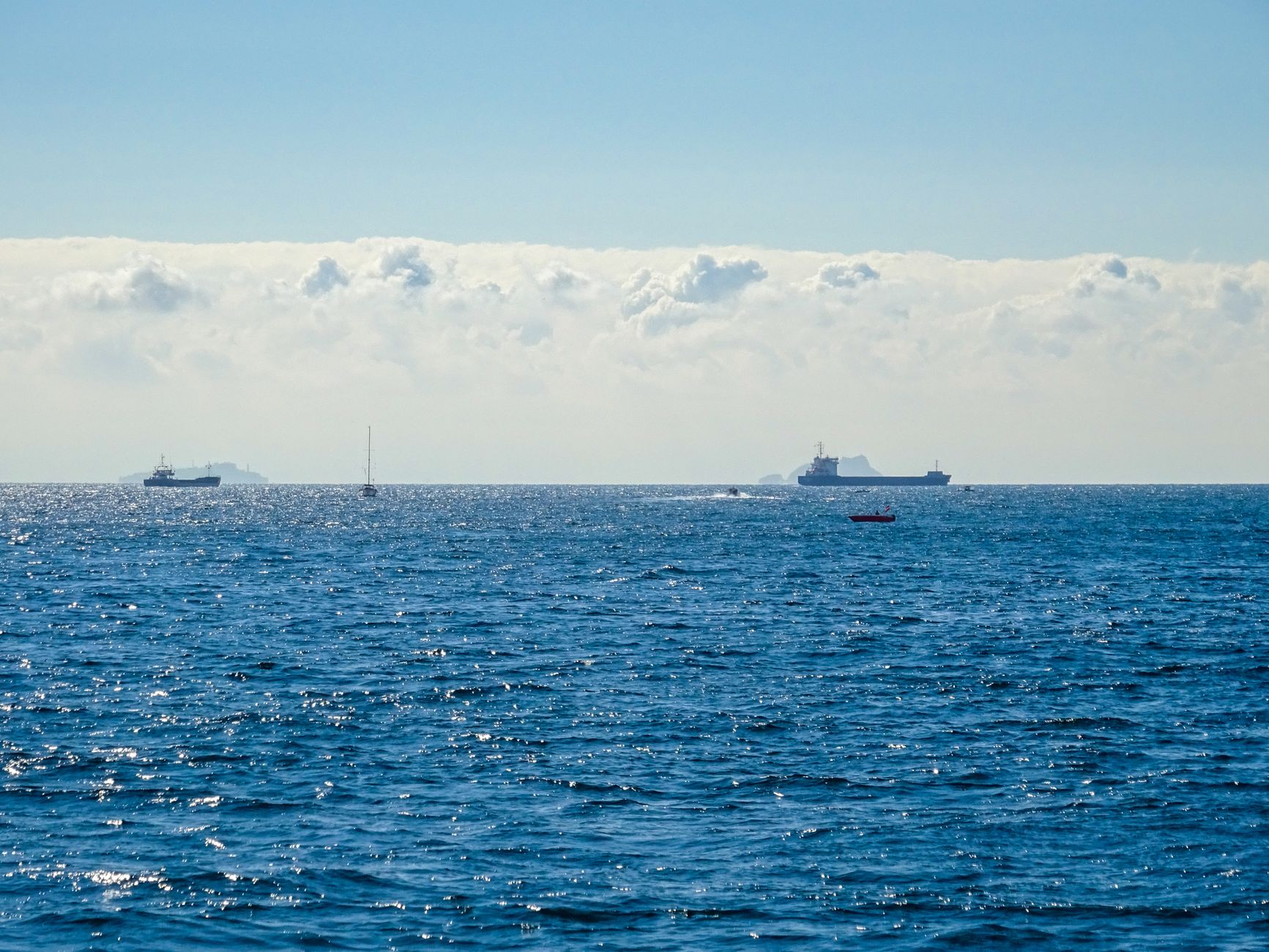
The escalation of attacks in the Black Sea has drastically reduced the flow of grain from that major exporting region, which pushed up wheat prices for Canadian farmers and is putting pressure on import-dependent nations.
Rubio defended the invitation to Lavrov, arguing that it would be impossible to end the war diplomatically without talking to Russia, though he admitted that such a deal is not on the immediate horizon. He said there was growing interest — if not momentum — in partial deals, such as halting attacks on ships carrying grain and, in some cases, energy in the Black Sea. "This is threatening the world in terms of food security and also in some energy security," Rubio said. "We would like to achieve it. It doesn't solve the war, but at least it solves a unique aspect of it," he added, while describing the war as "very nasty" and "very destructive," with the risk of spreading to other countries through sabotage and drones that have entered NATO airspace.
Canadian Foreign Minister Anita Anand told Reuters that she would not have chosen to invite Lavrov, but she used the occasion to confront him directly. "I stared him in the eye and called out Russia's continued illegal invasion of Ukraine, the stealing of Ukrainian children, the attacks on Ukrainian vessels in the Black Sea, all of which is reprehensible and contrary to international law and international humanitarian law," she said, citing her remarks during a closed-door plenary session.
Anand said she had spoken with Ukraine's Foreign Minister Andrii Sybiha and with her Indian counterpart about implementing a limited ceasefire in the Black Sea and a moratorium on attacks on Ukrainian electrical infrastructure. She noted that several interlocutors are pushing for some kind of ceasefire, with particular focus on shoring up food supply chains and ending attacks on Ukraine's power grid before winter. "We have to address these issues now as Ukraine approaches winter," she said, noting that Canada has been involved in specific talks about a ceasefire in the Black Sea since the UN General Assembly in September. India and Egypt are among the hardest-hit countries and are seeking to protect their ships and crews; Ukraine is fully engaged, but Russia has not shown a willingness to move forward, she added.
Lavrov said on Friday that Moscow's position on the conflict is unchanged and that Russia cannot accept Ukraine as a "military threat to the legitimate security interests of the Russian Federation." Rubio urged G20 participants to cooperate: "Because we all face these challenges, we must all work together to address them... The future of our nations depends on our willingness to understand that, while our interests may not always align, we must always seek to work together to advance them when and where they do align."
Rubio also said he had spoken briefly with Lavrov on the sidelines of the meeting about the possibility that U.S. President Donald Trump and Russian President Vladimir Putin could meet at next month's APEC summit and at the G20 leaders' summit to be held at Trump's Doral resort in Miami in December. There is no firm commitment that Putin will attend the G20 summit, and Rubio did not rule out Trump inviting Ukrainian President Volodymyr Zelensky, especially "if something positive could happen as a result of his attending."