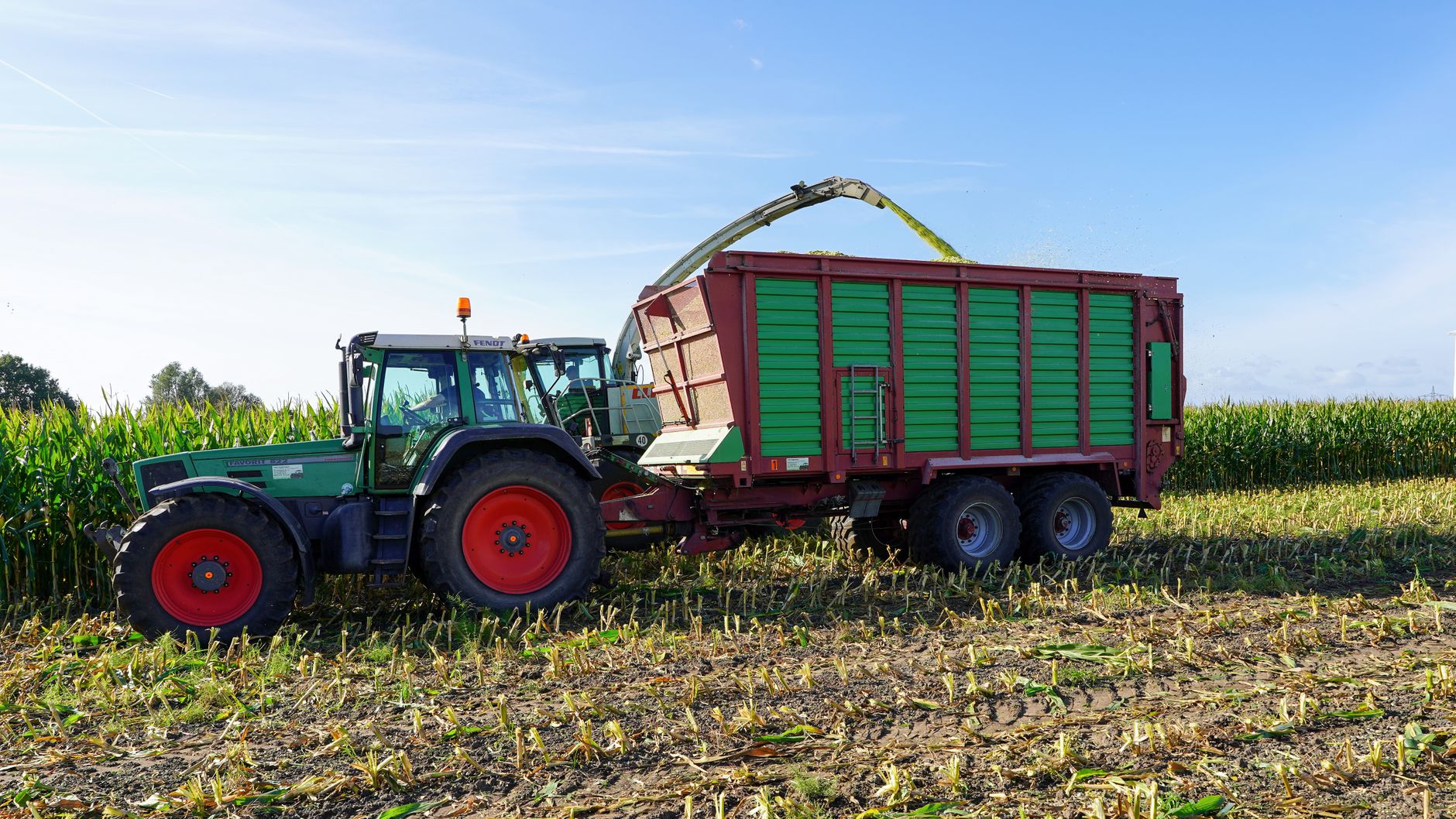
Argentina chops about 2.4 million hectares for conserved forage, 3% more than in the previous season. Juan Monge believes beef cattle production is a still-untapped market for silage, subject to efficiency and the economic equation.
The production of conserved forage is growing in Argentina, but the sector still has a market to conquer that is not necessarily in dairy farms, where the technology is already in place, but in beef cattle production. There, according to agronomist Juan Monge, a lecturer at the Universidad Nacional de Villa María and an adviser to the Cámara de Contratistas Forrajeros, there are many farms that do not use silage to feed their animals.
“I personally see an opportunity in beef. In dairy too, but we are heavy forage users in general,” Monge said in an interview with Bichos de Campo. And he illustrated the difference between the two activities: “In beef there are a lot of animals that today still don't know silage.”
The specialist made clear that adding silage to a livestock operation does not by itself guarantee an economic improvement. It means changing the feeding regime, organizing the production and conservation of reserves and taking on a cost that not all farms can afford, so it must come with greater productive efficiency.
Estimates from the Cámara de Contratistas Forrajeros indicate that about 2.4 million hectares are chopped for conserved forage in Argentina, 3% more than in the previous season. Monge called for caution when interpreting those figures: in 2023 the area reached 2.6 million hectares, but that increase was associated with low crop yields, which forced more land to be harvested to achieve the necessary volume of feed.
For the adviser, the challenge is to distinguish between circumstantial increases and genuine growth, understood as the incorporation of new areas and production systems into the use of forage reserves.
Beyond beef cattle production, Monge identified the diversification of crops destined for animal feed as another avenue for growth. He explained that decisions are not the same in all regions: in environments with greater productive potential there are more alternatives, while in areas with frequent droughts or uncertain agricultural results, spreading risk across different crops can prove essential.
“Depending on the environment, you see more crop diversification,” he said. Relying on one or two corn crops to produce the year's reserves can leave a farm in a difficult position if the weather does not cooperate; combining corn, sorghum and pastures makes it possible to spread harvest opportunities and reduce exposure to a single point in the year. Monge stressed that yield differences between regions end up affecting the cost of the feed produced.
As for how much of that potential will translate into new silage users, the specialist was cautious: “I don't have a crystal ball.” His hypothesis points to beef cattle production that still feeds many animals without resorting to this tool, but that could find in it an alternative to improve its production systems, as long as the economic equation works out.