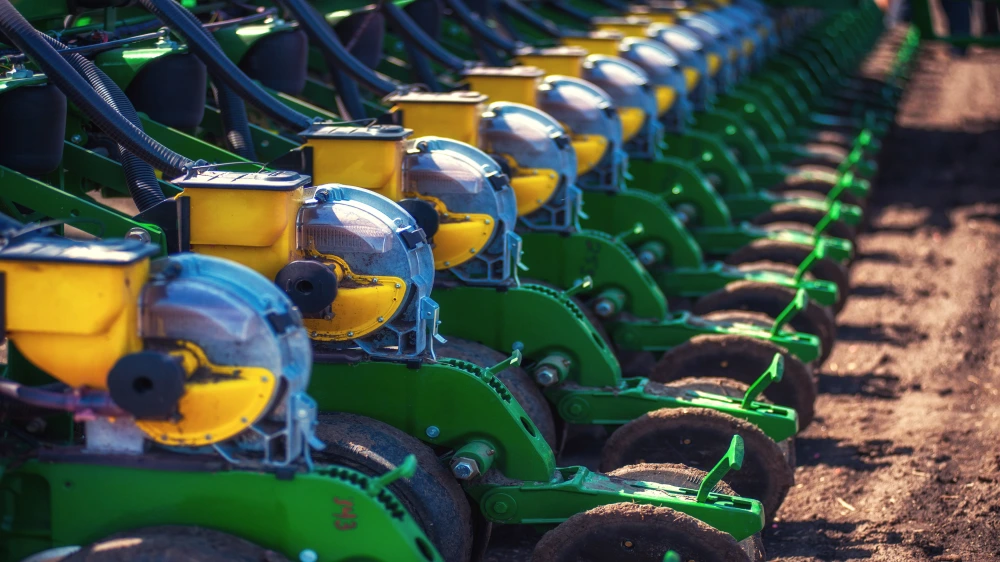

A report describes the reasons for the different trajectories over the past 40 years: consistent policies, more investment in technology and support for producers, versus exaction on this side of the border.
In 1984, Argentina and Brazil were at a point of parity in the agricultural sector. Both countries produced approximately the same number of tons of grain. However, that equality is a thing of the past. Today, according to a Cippec report , for every ton Argentina harvests, Brazil obtains more than three . The comparison illustrates a contrast in production trajectories that, over four decades, has resulted in a relative lag for Argentine agriculture.
The document emphasizes that the difference was not a result of chance, but rather the direction of the policies applied in each country. "One of the explanations for this decoupling was the difference in the quality, consistency, and direction of the economic and productive policies applied to the agricultural sector," the study maintains.
Divergent policies
In recent decades, Argentina has gone through cycles of liberalization and deregulation, followed by periods of severe trade restrictions and controls on the domestic market. This dynamic has generated a disconnect between local and international prices. While the liberalization of the agroindustrial sector, Mercosur , and entry into the WTO in 1994 in the 1990s broadened its international integration, this momentum has gradually waned.
Subsequent measures, such as taxes and quotas on exports, tariffs on imports, and domestic price controls, ultimately affected profitability. According to Cippec, "the input-output relationship deteriorated: profit margins shrank, investment fell, and the adoption of new technology slowed."
In particular, since 2011, with the introduction of exchange controls and high export duties, Argentine agriculture has abandoned its expansionary model and shifted to a defensive approach , focused more on preserving activity than expanding it.
The Brazilian Way
Brazil, on the other hand, adopted a long-term strategy based on consolidating agriculture as an engine of development. It combined the expansion of cultivated land with sustained productivity improvements, driven by the incorporation of technology, financing, and technical assistance.
This growth was supported by specific public policies. The Safra Plan annually channels subsidized financing and tools to producers of various scales. Pronaf promotes family farming. And Modernfrota provides credit for technological modernization through the purchase of machinery.
The result was a more favorable scenario for producers. According to the IDB's Agrimonitor international monitoring system, Brazil consistently maintained positive levels of producer support (PSE), while Argentina consistently recorded negative levels. In 2023, the country ranked last in the global ranking.
The Brazilian process was not limited to the countryside. The expansion of agribusiness was accompanied by the growth of intermediate cities that acted as hubs of economic dynamism. The case of Goiânia, which in three decades reached a population similar to that of Córdoba, is illustrative. According to Cippec, "although this urbanization was dispersed and unplanned, it demonstrates how intermediate urbanizations consolidated themselves as organizers of the rural economic framework."
Opportunity for Argentina
Despite the adverse outlook, the report indicates that Argentina still has room to reverse the situation. "Today, with a more stable macroeconomic environment, we have a new opportunity to produce more with more," the document states.
The assessment recognizes that Argentina's manufacturing network sustained activity even in adverse circumstances, impacting transportation, services, industry, and technology. Now, the reduction of macroeconomic distortions provides a framework for greater predictability.
For Cippec, the challenge is to abandon the defensive strategy of "producing the same with less" and move toward an offensive strategy of "producing more with more": with more investment, greater public-private collaboration, and increased productivity . This involves aligning capabilities, improving competitiveness, and removing obstacles that limit the potential of Argentine agriculture.
Source: Infobae.com