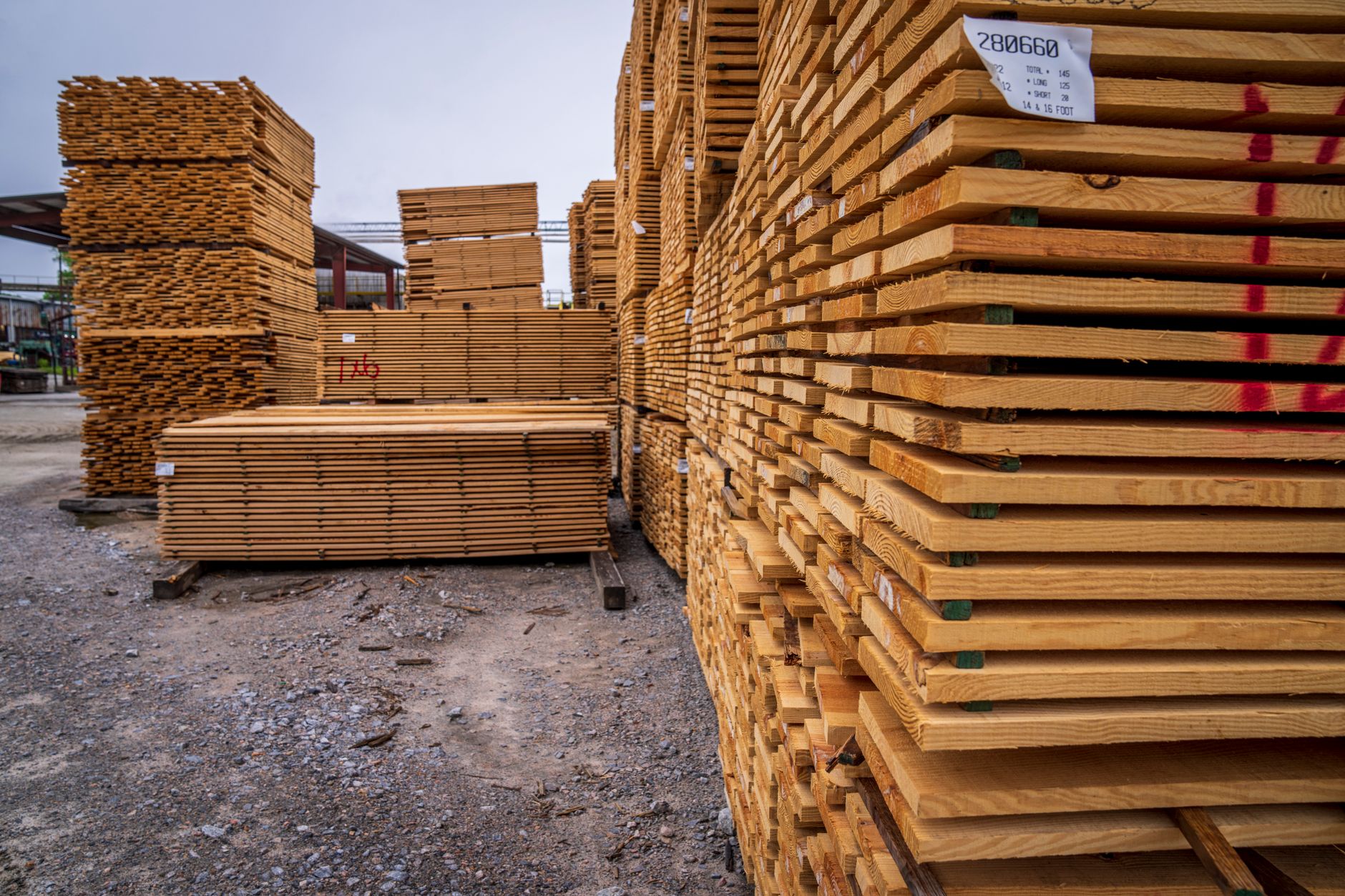
The Cooperativa de Liebig installed its own sawmill that produces around 12,000 pallets a month to ship its Playadito yerba mate and processes 120 tonnes of wood per day, using even the waste as an energy source.
The Cooperativa de Liebig, best known for its yerba mate business and its popular Playadito brand, added to that operation a production line that was already part of its assets: forestry. About 60 kilometers from its plant, the cooperative had nearly 2,000 hectares of forest plantations and, some six years ago, it decided to move one step further up the chain by installing its own sawmill.
The goal was not only to sell wood: most of what comes out of there ends up as the pallets the cooperative itself needs to ship yerba mate to the domestic market. "We are making approximately 12,000 pallets" per month, explained Juan Stvass, who has worked at the sawmill for four years. All of that output is absorbed by the cooperative's yerba mate business.
The facility currently processes around 120 tonnes of wood per day. The raw material comes from the cooperative's own forest plantations, from forested areas belonging to its members and also from external suppliers.
At the start of the process, the logs pass through a scanning system developed together with the equipment manufacturer and the Universidad Nacional de Misiones. That technology analyzes the wood and allows it to be positioned in front of the saws in order to obtain the largest usable volume possible from each cut. In addition to pallets, the sawmill produces wood that can be destined for both the domestic market and for export.
The integration with yerba mate does not end with the pallets: it also extends to the waste generated by the sawing itself. Freshly cut wood must pass through a dryer before it can be used, and that is where sawdust comes into play. "We have no waste or pile of sawdust outside," Stvass said. That material is used to feed the boiler that provides the heat needed to dry the wood.
There is also another by-product: wood chips, made of larger particles than sawdust. Instead of discarding them, the cooperative sends them directly to its yerba mate process. "The chip also goes to the heat side. The yerba mate dryers and the steam boilers are fed with the chip that comes out of here," Stvass explained.
In this way, the forest plantation that was part of a cooperative-owned field became part of a much broader circuit: the wood arrives at the sawmill, part of it ends up as pallets to ship the yerba mate and the waste returns to the production process in the form of energy. After only six years in operation, the sawmill has already found a way to hook into the main business: processing wood so that, one way or another, almost all of it ends up helping to move the yerba mate.