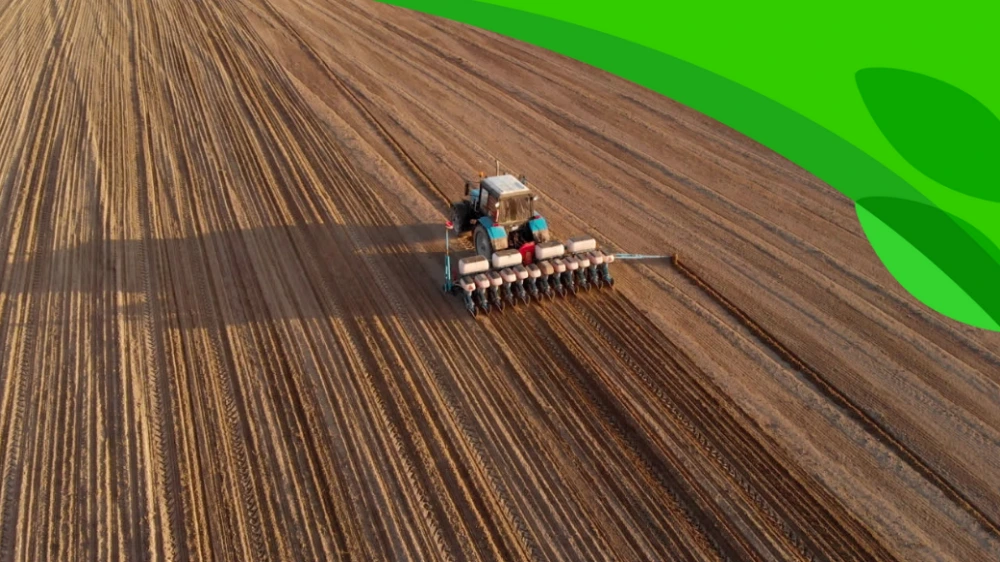

Argentina's crop volume has remained virtually stagnant for the past 20 years (Reuters)
Argentina is increasingly lagging behind Brazil in terms of agricultural technology and the consequences are clear to see. If we compare the yield of soybeans in Argentina from the 2000/01 to the 2002/03 campaign, it gives an average of 2.71 tons per hectare or 27.1 quintals per hectare. Twenty years later, in the 2018/19 – 2022/23 campaigns, practically the same figure is obtained: 2.71 tons of soybeans per hectare.
Carrying out the same analysis for Brazil, a yield of 2.77 tons/ha was found at the beginning of the last century and 3.43 tons per hectare in its most recent campaigns.
Thus, while average soybean yields in Brazil have grown by 24% over the past 20 years, those in Argentina have stagnated. Furthermore, the data in this analysis take into account the exceptional 2022/23 harvest, which was a production disaster for Argentina and the best harvest in the history of Brazil. However, if this campaign is excluded, the average Argentine yield would rise to 2.82 tn/ha, which implies an improvement of 4%, in percentage terms one sixth of the increase in yields in Brazil.
According to a study by the Rosario Stock Exchange (BCR), if the productivity gap between Argentina and Brazil were to close, our country could produce more than 12 million additional tons of soybeans . Valued at current FOB prices, this would represent around USD 5,144 million . “In addition to the growth of agricultural production, this closing of gaps would also result in an increase in soybean processing by the oil industry. By reducing idle capacity and supporting global demand for oils and flours, the closing of gaps would lead to a much-needed export rebound,” the entity indicated.
Many factors explain the divergence in yields in recent decades between Brazil and Argentina. There is no doubt that the climatic impact and rainfall dynamics of each harvest are decisive when analyzing the productive yields of any crop in each situation.
However, the use of seeds and the application of technology through multiple developments is one of the key elements when it comes to structurally analyzing the productivity of the agroindustry. Scientific work shows that a certain genetic gain was maintained in the country but of lower value than in Brazil, which also had a “genetic leap” with changes promoted by Argentine companies, according to information provided by Acsoja.
The higher disposable income of Brazilian producers allowed them to invest more in technology; the absence of export duties gave them disposable income advantages over their Argentine peers.
In this sense, the higher disposable income of Brazilian producers has allowed them to amplify their investments in technology to levels higher than those of Argentine value chains. Among the many reasons for this, the absence of export duties in Brazil already gives Brazilian production an advantage in disposable income over Argentine production.
Consequently, this improvement in disposable income resulted in high volumes of investment in the neighboring country, with an emphasis on research and development in genetic improvement. In the case of soybeans, one of the data that shows this is the registration of new soybean varieties, which in 2023 reached an all-time high.
With 337 new events registered, Brazil crowned four consecutive years of growth in soybean variety registration, according to data from its Ministry of Agriculture and Livestock (MAPA). “Not content with this, Brazil has been consolidating a volume of registrations well above Argentina, a trend that has been seen since 2011,” said the BCR.
In this sense, Brazil has three times more soybean genetic improvement programs than Argentina. Not satisfied with this, with a higher average investment per program, Brazil has twice as many biotechnological events as Argentina. The 1997 Brazilian Cultivar Protection Law was relevant in this regard, generating protection through certification and guaranteeing the intellectual property of the seed to the breeder.
The seed sector has had a special importance for the productive dynamics of soybeans in Argentina. The increase in agricultural efficiency and the strengthening of defense against diseases, insects and herbicides in the fields, thanks to the development of technological packages, has made seeds an essential input for agriculture.
Brazil has three times as many soybean genetic improvement programs as Argentina. And with a higher average investment per program, it also doubles its investment in biotechnology events.
Innovations arising from advances in biotechnology and conventional seed breeding are essential to support production. Furthermore, and as has been pointed out previously, the main beneficiaries of these developments have been the producers.
However, the persistence of export duties and potential improvements not applied in terms of intellectual property recognition have been limiting this Argentine productive growth. In this context, the production of controlled seed in the three main crops in Argentina has been showing a downward trend, despite its peaks in 2011 and 2019.
“A more extensive use of these innovations, in addition to supporting producers and their crops, would generate a new boost for the Argentine seed industry. In this sense, this key value chain for the agroindustry comprises more than 2,600 companies and concentrates a Gross Production Value of close to USD 3 billion each year,” stated the study by the Rosario Stock Exchange.
Loss of prominence
Technological stagnation, macroeconomic instability, heavy tax burdens and other measures discouraging production have had a direct impact on Argentina's position among the top agricultural exporters.
According to data published by the Rosario Stock Exchange, based on data from the World Trade Organization, Argentina went from being the eleventh most important exporter to disappearing from the top 15 worldwide. Meanwhile, Brazil, which 40 years ago was sixth in that ranking and fell in the two decades that followed, in the last 20 years recovered and gained positions until it became third in the world ranking and became a global agro-food power.
These findings seem paradoxical, because the sector includes (according to the Indec classification) the two most dynamic sectors in Argentina in terms of exports: Primary Products and Manufactures of Agricultural Origin. These are the only ones that have increased or maintained their levels of sales abroad in the last 15 years, while the other two (Manufactures of Industrial Origin and Fuels and Lubricants) have stagnated or declined.
 Soybeans are loaded onto a truck after being harvested, in Pergamino, on the outskirts of Buenos Aires (Reuters)