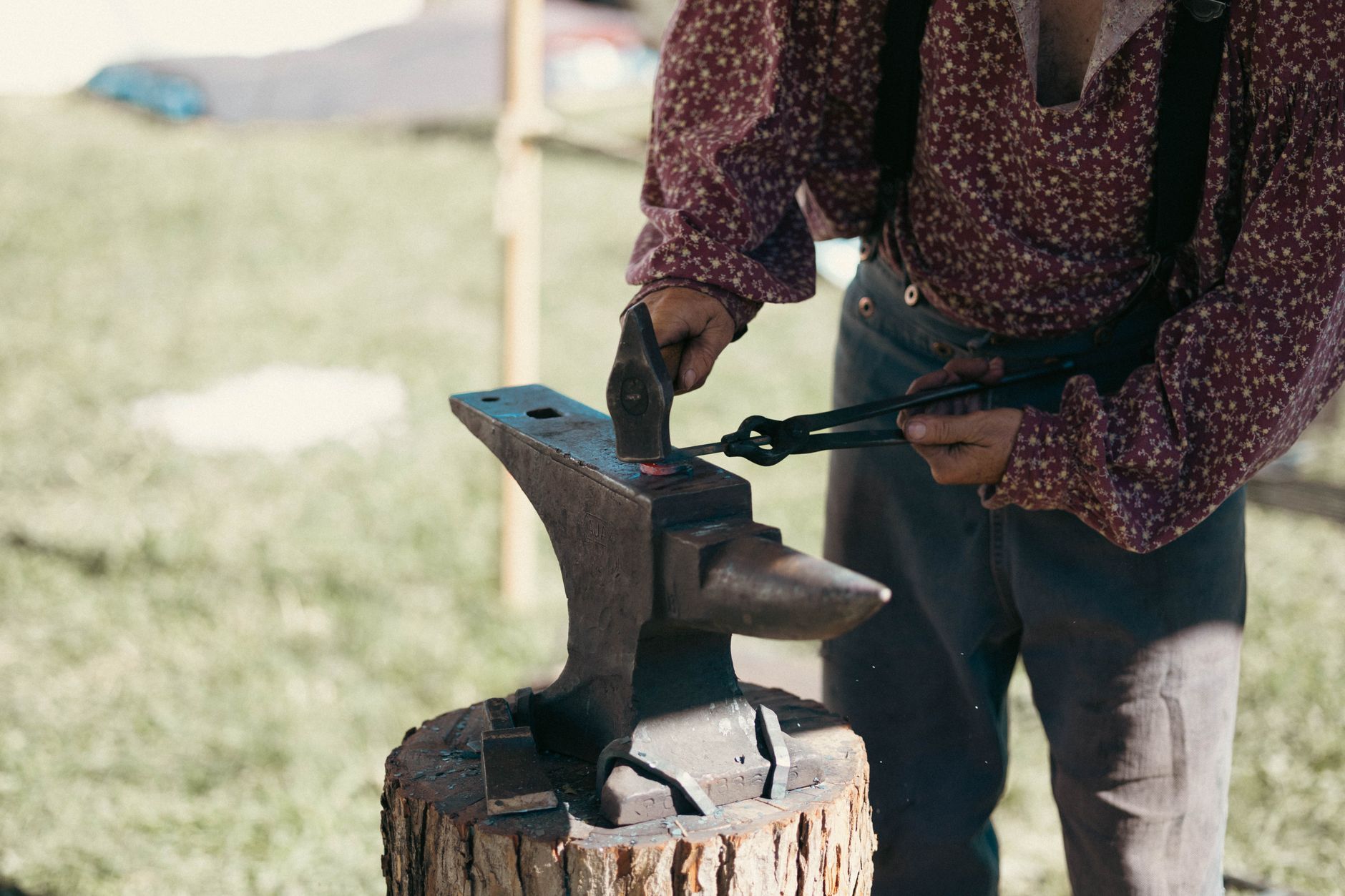
Agronomist Pedro Martín Pechar, 62, marks three decades teaching traveling horseshoeing courses in Argentina and Chile. He warns that the poor condition of horses' hooves stems from owners' "negligence" and plans a school in San Antonio de Areco.
Agronomist Pedro Martín Pechar, 62, is marking three decades teaching hands-on horse-shoeing courses on farms and estancias across Argentina and, more recently, in Chile as well. "No one has an excuse to be going around with lame, unshod or foundered horses," he warns, arguing that the poor condition of hooves is due to owners' "negligence" and not a problem with the animal.
"It's deplorable that it's common to see horses fat, with their hooves broken, because you have to understand that their hooves grow a centimeter a month and you have to trim them at least every 40 or 45 days. And that is simply called 'negligence by the owner.' I see it on farms and estancias, and at parades as well," he says with a mix of sadness and anger.
Pechar was born in Buenos Aires by circumstance, but he considers himself of Fuegian blood, from the Río Grande country in Tierra del Fuego, where his parents were born and where they raised him. His father managed his father-in-law's estancia, which raised sheep, and that is why he chose to study agronomy: he graduated from the Universidad Católica in Buenos Aires in 1986. Since his wife is from San Antonio de Areco, he currently lives in that town in Buenos Aires province.
After graduating, he got a job in Junín de los Andes with Pedro de Larminat, helping him manage properties belonging to European owners that were run as hunting preserves. "After seven years there, I had gone independent and had already managed to lease a small farm next to the Chapelco airport, where I was raising 50 young steers. But suddenly I found myself at a crossroads: either keep doing my own thing or devote myself to the noble craft and art of shoeing horses," he recalls.
The opportunity came through Mustad, the world's first nail and horseshoe factory since 1832, headquartered in Sweden. "One of my clients, the Norwegian Mustad, saw the deficiencies in the shoeing of Argentine horses and offered to send me to the United States to take the professional farrier course (Farrier Science). He intended to found a school," he relates. In 1994 he traveled with veterinarian Federico Oyuela to the school in Tucumcari, New Mexico, and returned two years later: "Mustad Argentina bought 20 tool kits to teach courses, but with no place of its own, so it became a traveling school."
His diagnosis of the state of the horses is harsh. "You come across spectacular farms, but unless it's someone who knows the trade, it's rare for a country man to pick up a knife and start trimming a horse's hooves. And then they tell you that horse was very good last year, but now it can't be used because it's foundered, has white hooves, or they're all split." "A hoof problem, they say. But I ask: what problem does it have? Negligence by its owner. That's what we used to see with Marcelino Díaz, manager of a model estancia: if owners had few horses, but all of them healthy, trimmed, well shod and broken in, maybe they could run 100 more cows on the farm," he says.
Another false belief entrenched in the countryside, according to Pechar, is the idea that a horse trims its own hooves. "In the humid pampas, with good pasture and soft ground, their hooves don't wear down. It does happen, however, in the hills of Córdoba or on the Patagonian plateau, where as the hoof grows, the hard, abrasive ground wears it down." He therefore concludes that horses on the plains are the ones that most need maintenance and that "a horse should have permanent servicing, just as we do with the pickup trucks," because prevention is fundamental.
The courses he gives last three days on average and require at least 30 gentle horses to shoe, aimed at groups of 15 to 20 beginners, although an advanced student usually takes part. "Marcelino Díaz, manager of the Cóndor estancia in Río Gallegos, started hiring me every 2 or 3 years to give my shoeing courses, and he was the one who encouraged me to replicate it at the other estancias," he says. He usually brings along one or two assistant farriers trained with him.
"Not long ago I went to Chile alone, to the San Cristóbal polo club, where I gave a 2-day course for farriers. But most of my courses I give to beginners," he says. The Córdoba-based saddlery Crespo regularly organizes advanced courses and brings him in. Pechar teaches courses at the Sociedad Rural de Jesús María, in Bariloche and in Villa La Angostura. "This year I've been giving one course a month, of about 5 days instead of 3. For me, the best thing is to teach courses on the estancias. And happily, thanks to my traveling courses and social media, I have plenty of demand," he celebrates.
The farrier is now focused on a project he has pursued for a decade: "to found a horseshoeing school in San Antonio de Areco, like the ones in the United States." Since he can't fill the whole year with farriery work, he plans to round out the time with a trades school offering courses for millers, fence builders and gardening, among others. He wants the venture to "include a shed for working the forge and the anvils, and to have a space to stay overnight, thinking above all of those who come from other countries," so that he can teach longer courses, of about six months.
On November 28 he will hold the sixth edition of his farriers' championship "Forjando Areco" in San Antonio de Areco, a non-profit event. For the closing, he chose to dedicate the milonga "No me abandones ahora", popularly known as "Zaino, seguí pa' delante", written and performed by Hugo Giménez Agüero.