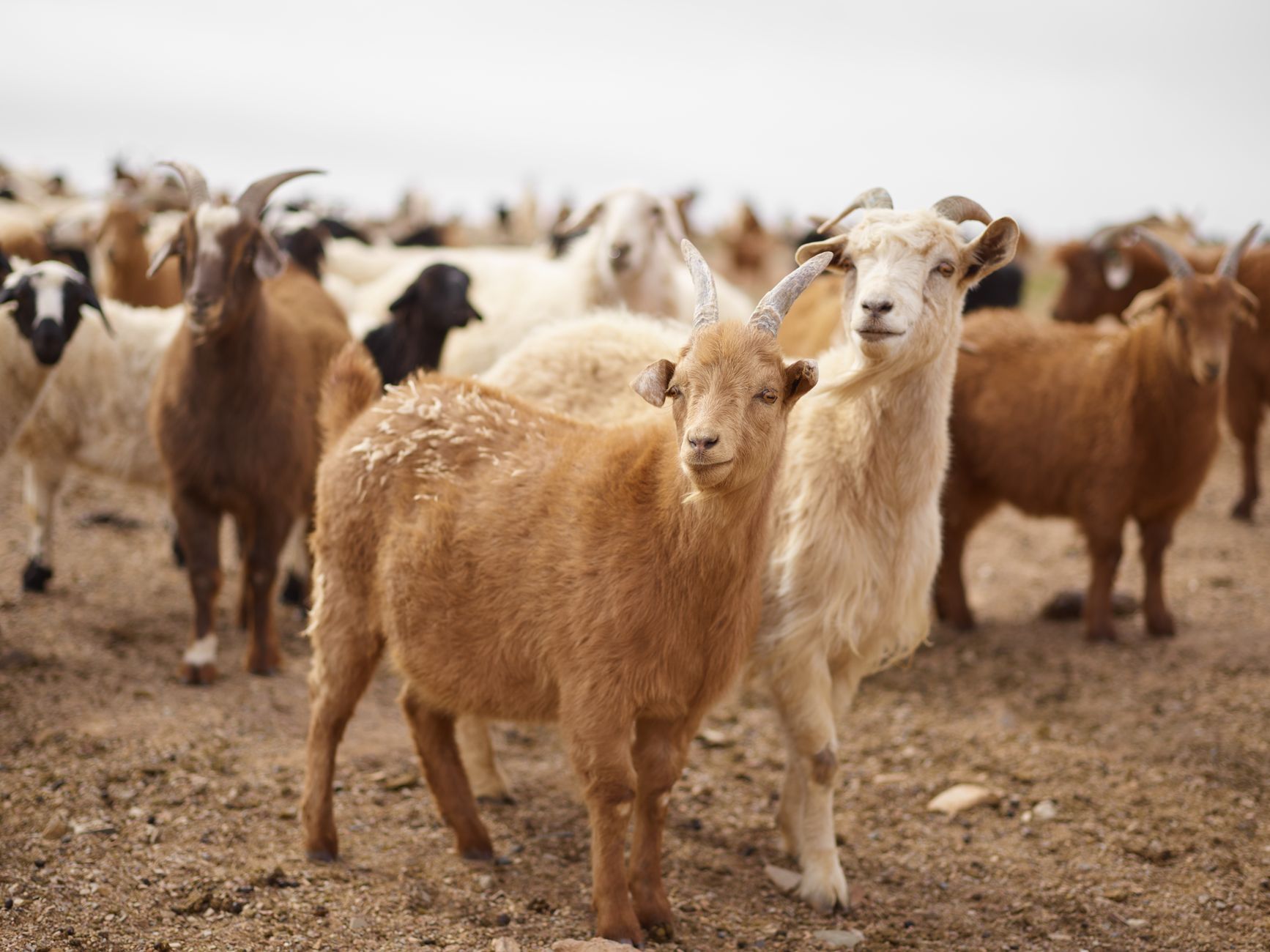
Juan Carlos Díaz, a goat producer from Quilino, supplements his goats with corn between August and October, when the scrubland offers little feed; one bag of the forage equals a quarter of what he is paid for a goat kid.
Between August and October, when the scrubland of northern Córdoba still offers little to eat, Juan Carlos Díaz's goats tend to wander farther than usual from the pens. Most afternoons they come back on their own, looking for the kids born a few days earlier; when that does not happen, the producer has to go out and look for them and, on their return, gives them corn, an expense that is repeated every afternoon during the hardest months of the year.
"August, September, October. It is hard when the goat does not come back and you have to go out and look for it," he told Bichos de Campo during a goat farming meeting held in Quilino, his town in northern Córdoba.
At that time of year, at the end of winter, there are usually pregnant goats and others with very young kids. If they do not find food nearby, the herd keeps moving deeper into the bush. "October comes and there is nothing," says Díaz, who in those days was still waiting for the first rains to bring new green shoots in the scrubland. Otherwise, the animals must be supplemented and costs get out of hand. In November, with the return of the rains and regrowth, the situation improves.
Díaz owns land, although today he raises his animals on the ranch he looks after, and considers himself a medium-sized producer. When asked for a minimum number of animals to seriously go into goats, he replies: "50 and up." The work is organized in two time slots: in the morning, the kids are separated from their mothers so that the latter can go out to graze in the bush; in the late afternoon, the animals are gathered, driven back to the paddock and given some grain if needed.
Although the big kid sales are usually associated with the year-end holidays, Díaz says he sells them "all year round" to buyers in the area. "Sometimes you sell ten, sometimes you sell five, sometimes you sell one. It depends." Asked whether the price is enough to pay for so much effort, he replies: "Well, more or less."
Díaz does the math with two figures he knows by heart: how much he is paid for a kid and how much a bag of corn costs him. With the values he mentioned in the conversation, a single bag of the forage took a quarter of what he was paid for an animal, which is why it is so important that it rains well on the scrubland. He likes the activity and complements it with other income. "This has a bit of everything," he says. He enjoys it when a kid is born, roaming the countryside and also eating his final product, the suckling kid of about 6 to 8 kilos. He even found a taste for the part that complicates his afternoons in August, September and October, which is looking for the mother goats: "I like to grumble."