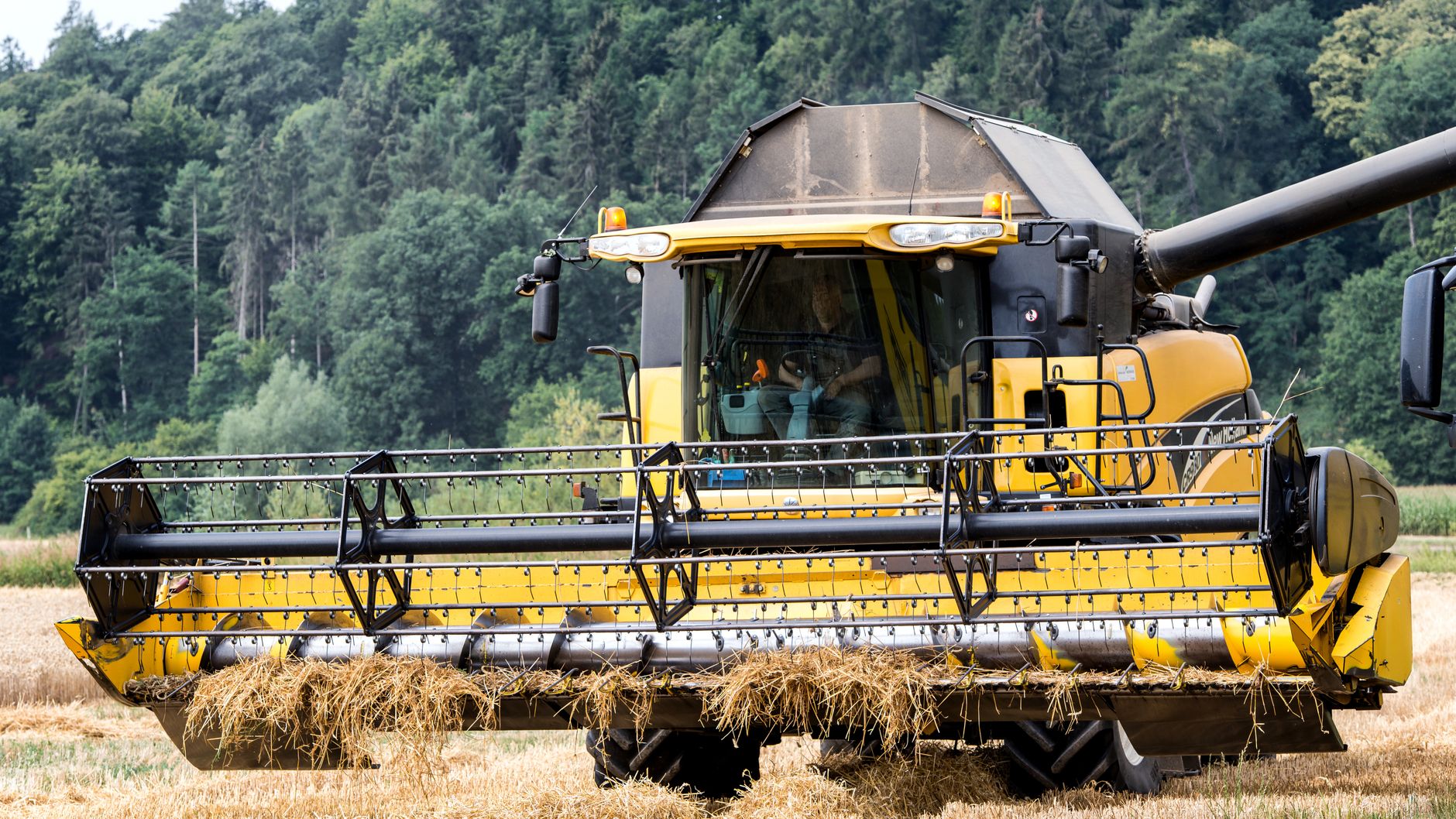
John Deere will phase out its Ottumwa and Clarion (Iowa) plants over the next two fiscal years and move production of windrowers, round balers and Hagie STS sprayers to other facilities. About 300 people would be affected at normal production volumes.
John Deere announced on Nov. 4 a long-term plan to progressively close its Ottumwa and Clarion plants in Iowa over the next two fiscal years, with the goal of "optimizing" its manufacturing and "improving operational efficiency." The company said it continuously evaluates its manufacturing footprint as technology, customers and markets evolve.
As part of that reorganization, production of windrowers and round balers at the Ottumwa Works plant will move to the Des Moines Works facility. The windrower transition is expected by the end of fiscal year 2027 and the round balers by the end of fiscal year 2028, at which point John Deere also plans to close the Ottumwa factory. In addition, small planter production will move from a plant in Moline, Illinois, to a John Deere facility in Paton, Iowa, during the next fiscal year.
In Clarion, production of Hagie STS sprayers at the Hagie Manufacturing plant will move to a Deere factory in Thibodaux, Louisiana. The company expects to end manufacturing operations at the Clarion factory by fiscal year 2029. John Deere acquired ownership of Hagie, an Iowa-founded company, in 2020.
In parallel, the company will move sugar cane harvester production from its Thibodaux, Louisiana, plant to a facility in Catalão, Brazil, to bring manufacturing of that machinery closer to the largest concentration of customer demand. According to the company, the Louisiana plant manufactured around 35 sugar cane harvesters a year for the U.S. market.
A company spokesperson estimated that, at "normal production volumes," approximately 300 people would be affected by the closures, though he warned that Deere is currently operating "far below normal production volumes due to the downturn in the ag economy." "Specific employment impacts will depend on future business conditions, production volumes, and staffing needs," said spokesperson Dustin Lemmon.
The City of Ottumwa said the decision "is not something anyone in Ottumwa wants" and estimated that closing the plant would mean a payroll loss of more than $30 million. "John Deere has been part of Ottumwa and a piece of our identity for a long time," the city said in a post, in which it thanked the company for its historic investment and for its commitment to helping with the transition and to locating a future company in the community. The city also said the John Deere Foundation "affirmed" its commitment of nearly $1 million to support Ottumwa and Clarion over the next three years.
Deanna Kovar, president of John Deere's worldwide agriculture and turf division, explained that the reorganization seeks to align production capacity with customer demand, gain flexibility and cost competitiveness, and sustain long-term investment. "The competitive nature of our business is continuing to change," Kovar said. "Just like farmers, we're constantly looking for ways to be more efficient and do more with less. The pressure that the U.S. farmer is under is not lost on us, and we want to be sure that we can continue to deliver innovation at the cost that customers expect."
The executive said that "today, 75% of what we sell in the U.S. is assembled in the U.S., and that really doesn't change with these announcements." She detailed that John Deere has 30,000 employees across the country, 29 facilities in Iowa with 12,000 workers and 12 in Illinois with 6,500 employees. "We continue to be a Midwestern company. These changes just make sure that we can be competitive in the long run. We don't make these decisions lightly. We make them with our employees, customers, and dealers in mind," she said.
Despite the closures, Deere maintained that it has continued hiring and that "we've called back over 1,000 employees from layoffs over the last two years, and we're going to be hiring some additional employees." Kovar framed the decision within a long-term strategy: "We know that we have more capacity than we need. We needed to figure out which facilities had the best long-term opportunity to remain flexible and cost-competitive for us."
Lemmon said affected employees will receive "timely information as plans are finalized" and that Deere will offer "comprehensive transition support," which may include internal transfer opportunities, retraining assistance, retention offers, relocation assistance, severance benefits and career-transition support.