
Technological innovation is coming to save the countryside
Artificial intelligence is not only used to create illustrations or texts from a few simple commands or to fuel the creativity of writers and filmmakers to create stories. It can also solve industrial problems thanks to the collection and massive analysis of data. In this sense, AI and agriculture have been allies for some time now, a union that, in times marked by climate change and war conflicts, is more evident and necessary than ever.
In this article we will take a journey through the use of artificial intelligence in agriculture, some real projects that are being carried out in Spain and what their main benefits are.
Artificial intelligence aims to teach machines to think like a human brain. Thanks to the massive collection of data, artificial intelligence can make the primary sector a much more efficient, optimized and safe activity.
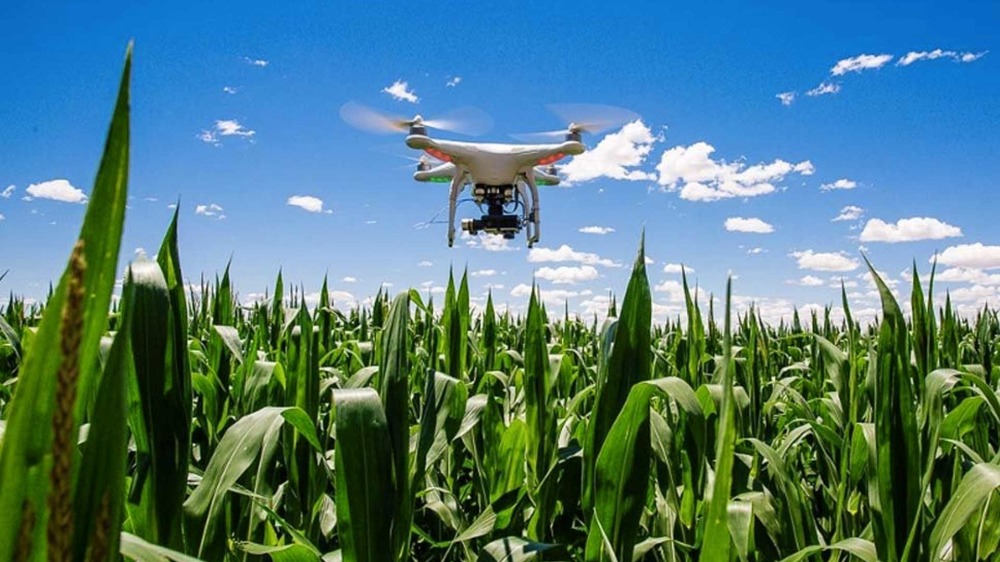
This is probably the greatest benefit of applying AI in the primary sector. As its name suggests, it involves applying artificial intelligence for precise, optimised and efficient agriculture, through monitoring of plots. Making the best possible decision based on data collected by GPS-equipped tractors, drones, robots on the farm that detect anomalies...
A very recent example of the application of this type of smart and optimized agriculture can be found in the Community of Madrid. As reported on the official website of the Community itself , it is a study “to improve monitoring in precision agriculture.”
Developed by the research institutes IMDEA Networks and AGUA, this project uses the greenhouse facilities of the IMDEA Agua campus to, in the words of the IMDEA Institute, “evaluate in a real environment the performance of the precision agriculture monitoring system communications.” And how do they achieve all this? Thanks to battery-free IoT devices, placed inside the greenhouse, which measure environmental parameters. This type of technology allows them to be placed at any point in the greenhouse and allows for the creation of a denser network of them; in this way, production performance is favoured. The next challenge facing the Institute is to integrate new detectors that measure other variables that help the farmer, such as soil humidity.
Another current precision agriculture plan is the so-called SENSOPLAG Project , aimed at combating pests that affect Valencian citrus crops. This project seeks to produce a control system that can reduce this type of pest, a system integrated by digital tools that achieve early detection, continuous monitoring of the pest and therefore be able to prevent it.
In this project we will see very clearly how artificial intelligence can help the agricultural sector. AINIA, one of the organizations participating in the project and experts in sustainable innovation, collects and analyzes satellite images and those captured by cameras integrated into drones to study the detection of pests and how they affect citrus fruits during different times of the year. Then, all these tools and data obtained are integrated into a single platform, an application that field professionals can then consult to resolve their doubts, help them choose the best possible treatment and when to apply them to achieve maximum effectiveness.
If we talk about artificial intelligence and agriculture in our country, we cannot fail to mention Agerpix , a company that develops precision agriculture solutions. They are pioneers in developing a system of artificial intelligence tools capable of detecting, with a precision of 90-95%, the quantity of fruit in plantations.
}
This automatic fruit counting system is called OnFruit 360. It consists of a set of cameras and GPS that the farmer himself can easily install on his tractor. The cameras take photos of the crop while the worker walks among them at a certain speed. All these images provide information about the size and quantity of the fruit, the vigor of the plant and its leafiness by area.
All this data tells the farmer how much irrigation, fertilizer or different phytosanitary products to apply. In this way, and thanks to artificial intelligence, he will be improving the quality of his product, reducing his company's expenses and generating less waste.
According to the latest report from the State Meteorological Agency (AEMET), from October 1, 2022 to July 18, 2023, the accumulated rainfall was 480 liters per square meter, 15% less than expected, taking into account data from the same period between 1991 and 2020. There are areas of Spain where rainfall does not even reach 75% of its normal value.
In this context, the application of artificial intelligence can be an effective lifesaver for fields. Let's take a current example: the Almería-based company Ikos Tech offers tools to automate irrigation through an artificial intelligence algorithm. Its flagship product is called Ikoscontroller, a device to which up to 10 sensors are connected, including high-precision tensiometers, which calibrate the state of the soil and what water the plants need, as well as other sensors that analyse humidity or ambient temperature.
This entire group of sensors, connected to the Ikoscontroller centre (which is powered by solar energy), sends the information collected to the cloud, to an app developed by Ikos called Raindrop. Raindrop is an artificial intelligence tool that indicates exactly how much water a given crop needs and when it needs it. All the data then goes to Ikosconnect, attached to an irrigation machine. The farmer will only have to adjust the irrigation according to the algorithm's recommendations and the process will be carried out automatically.
Source: telefonica.com
 Technological innovation is coming to save the countryside