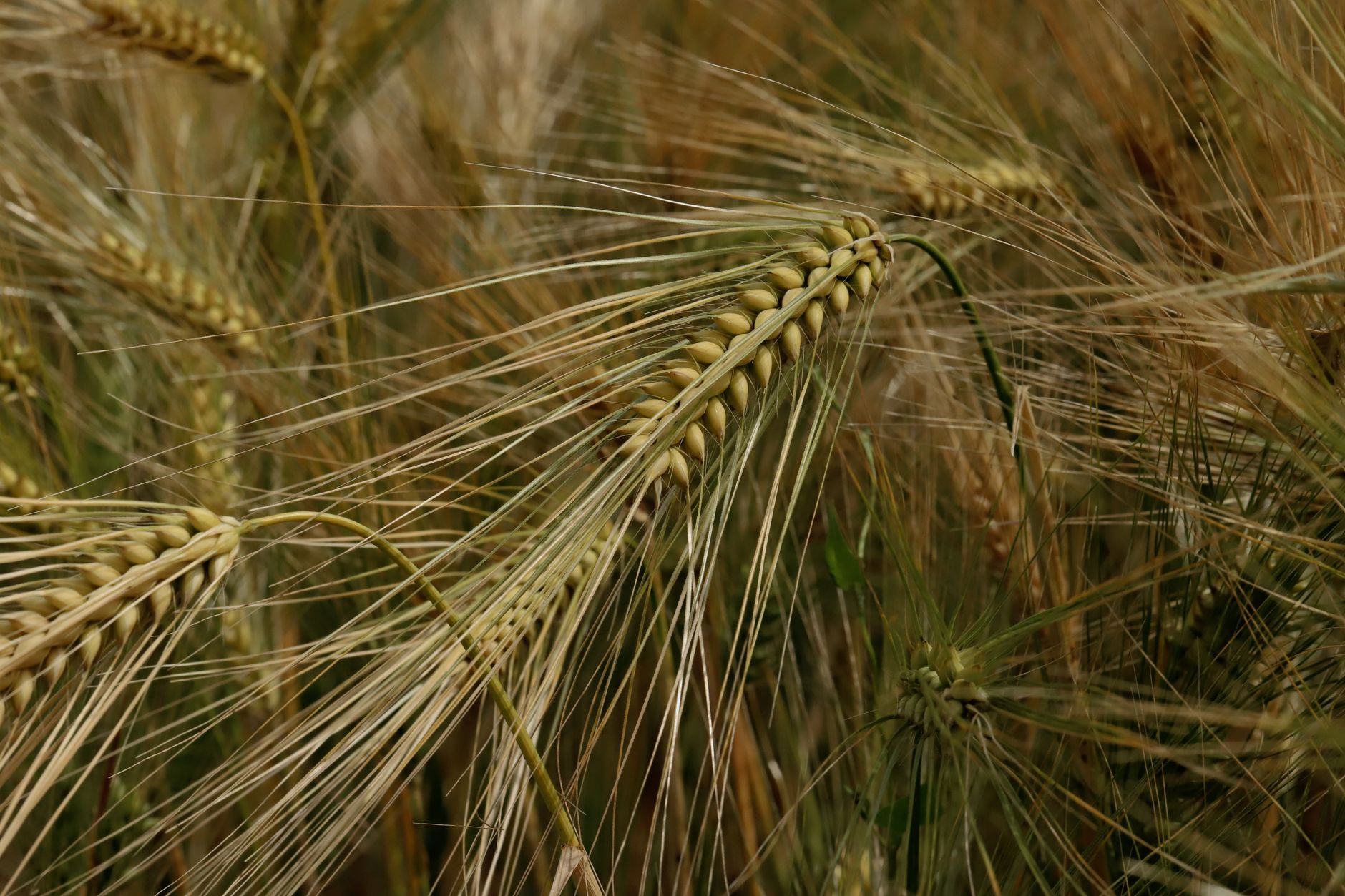
At its experimental farm in Tres Arroyos, Cervecería y Maltería Quilmes plants malting barley after a soybean crop preceded by vetch, a rotation that raised available nitrogen and reduced the use of chemical fertilizers to a minimum.
At an experimental farm in Tres Arroyos, Buenos Aires, malting barley is planted after a soybean crop that is itself preceded by vetch used as a cover crop. Alejandra Gribaldo, head of the research and development program at Cervecería y Maltería Quilmes, adopted that rotation after several trials in order to protect the soil assets of the facility devoted to genetic and agronomic experimentation.
“Both vetch and soybean are used as cover crops. We rotate with legumes to improve soil health: the use of nitrogen-based chemical fertilizers is very limited,” the researcher says.
Cover crops are mechanically terminated with enough lead time to improve, year after year, the levels of organic matter present in the soil.
“We started this rotation five seasons ago and available nitrogen levels in the soil began to rise right away; we save a great deal on fertilizers,” she adds.
Since it is a center devoted to the development of malting barley cultivars, fertilization is planned on a rigorous basis and based on soil analyses carried out systematically.
“By managing an experimental farm, we can appreciate the impact of agricultural intensification, especially in areas like ours, where the presence of caliche is a significant limitation,” she notes.
With more than 50 years of history, the Centro de Investigación y Desarrollo de Cebada Cervecera de Tres Arroyos has developed 20 barley varieties, which today account for around 70% of the area planted with this crop in Argentina.
Among the most recent advances are Malkia and Florence, two varieties aimed at improving yield, quality and the adaptation of crops to different environmental conditions.
Alejandra and her team of plant breeders pursue a dual purpose: to generate high-yielding cultivars with good plant health, and to design crops that deliver an optimal grain for brewing beers with high quality standards.
After all, Cervecería y Maltería Quilmes — owned by the global corporation AB InBev — produces international brands such as Corona, Stella Artois, Budweiser and Michelob Ultra in Argentina. One of every four liters of beer that AB InBev brews worldwide is made with barley from Buenos Aires province.
“At the Centro de Investigación y Desarrollo de Tres Arroyos we have a malting unit that replicates a malting plant at small scale, to test the quality of each new variety developed,” she explains.
If the master maltsters and brewers do not approve the new cultivar, it is discarded, no matter how good its agronomic qualities may be. Nothing is lost: every new creation becomes part of the malting company's genetic pool.
“It takes us between 10 and 12 years to develop a new variety. What begins in the field ends in a tasting test,” Alejandra stresses.
“With genomic selection and the management of large volumes of data, in addition to the use of growth chambers, we can speed up the development times of a variety, but the process is not for the impatient,” she states.
In addition to the Tres Arroyos field, the company has a farm of almost 68 hectares in General Fernández Oro, Río Negro, devoted to hop growing.